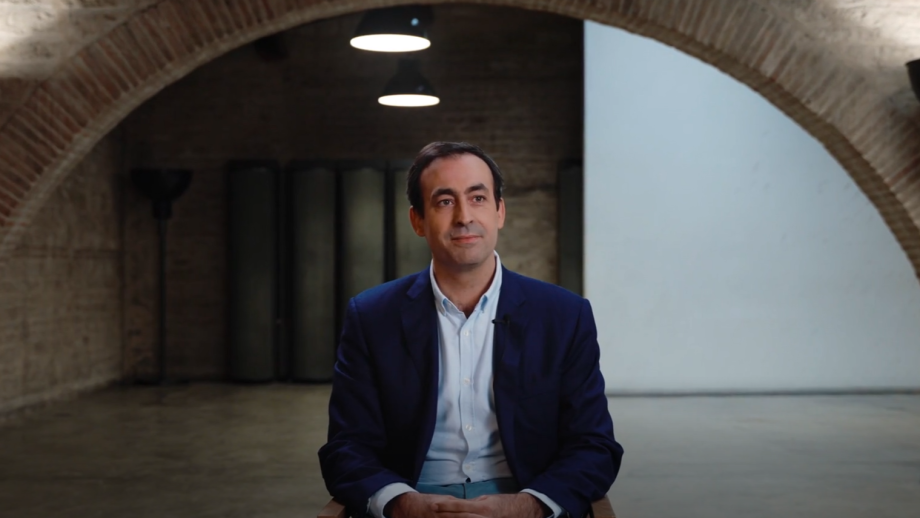
'Domaines de Demain' (or 'Estates of Tomorrow') is a series first produced and published by Le Figaro Vin. It puts a simple question to some of the most respected names in fine wine: what does the future of our industry actually look like, according to the estates shaping it? Ella Lister, founder and CEO of Wine Lister and Executive Director of Le Figaro Vin, speaks with a handful of Bordeaux's top players to explore this question. They include: Château Saint-Pierre, Les Carmes Haut-Brion, Château Suduiraut, Château Latour, Domaine des Perchés, and Lafleur. Each spokesperson offers insight into where Bordeaux has been as well as where it is heading.
For the first instalment of the series, we meet Jean Triaud of Château Saint-Pierre, the Fourth Growth Saint-Julien estate that has been under the ownership of the Triaud family since 1982. The estate traces its origins to the 17th century and was classified first among the Fourth Growths in 1855. Now representing the estate's next generation, Jean has overseen a repositioning of Saint-Pierre – a bold new visual identity centred on the symbolism of its keys, and the estate's move to organic farming.
Jean reflects on the enduring relevance of the 1855 Classification, the balance between heritage and visibility, and what it means to build an "estate of tomorrow" without losing sight of where it came from.
Ella Lister: Château Saint-Pierre has given itself a new identity, a powerful emblem, a modernised image, and a more direct voice. While remaining faithful to its history, the château affirms that innovation and authenticity can go hand in hand. Let's welcome Jean Triaud.
Château Saint-Pierre has unveiled a new visual identity centered around a powerful emblem: the keys. It is said that they open the gates of paradise. Is this true?
Jean Triaud: Saint-Pierre's keys are known to be the keys to paradise. In any case, they contribute to it. What will really open them, I hope, is the product inside the bottle. There are two keys, but in reality there are three key heads that have important symbolism for us because, in fact, we started with that and developed our identity around it. It is the trinity that could be linked between the château, the cellar and the vineyards. And we are the custodians of this transition, in a way. This new era of Saint-Pierre isn't a rebirth, but rather a new phase of growth. It was our way of expressing the idea of a new day dawning. The symbolism was very much part of it.
EL: You have officially converted to organic farming with the 2024 vintage. It's a long and demanding process. So, what triggered the decision to take this step?
JT: It truly was a conversation that included the whole team. It wasn't the new generation arriving and saying, "That's it – we need to put a stop to this today." Not at all. It was a collective effort. We realised that the way we were already managing the vineyard was, in so many ways, very close to what is required for organic farming. So, taking that step felt quite natural for us. Everyone agreed. The most important thing, I think, is to try above all to respect your terroir, the people who work there, and the consumers who ultimately drink the wine. If you do that, you're already on the right path.
EL: Do you think the 1855 Classification is still a relevant marketing tool today?
JT: There are several ways of looking at the classification, but first and foremost, there is the historical reference. It is, after all, nearly 200 years old and one of the most well-known wine classifications in the world. It is closely linked to the evolution of Bordeaux's wine trade and distribution system. So yes, for me, it remains relevant and still has real value and relevance today.
JT: Château Saint-Pierre is fortunate to be located in a highly regarded region: Bordeaux, Saint-Julien in the Médoc. It's a very exclusive club: the Grand Crus Classés of 1855. However, in this space, Château Saint-Pierre was well-known among wine professionals but perhaps not sufficiently prominent among the wider public, if that makes sense. Our goal is therefore to introduce Château Saint-Pierre to as many people as possible.
EL: In your view, does an "estate of tomorrow", in order to be visible, need to innovate and invest in its communication?
JT: The most important thing is to truly understand your terroir, in keeping with what you want to produce. The product always comes first. But of course, in today's world, it's essential to have packaging, communication, and promotion that is consistent with the message you want to convey. And that's exactly what we're trying to do with Château Saint-Pierre.
EL: If you had to picture the estate of tomorrow, in 20 years' time for example, whether in Bordeaux or elsewhere, what would it look like?
JT: For me, the estate of tomorrow is one that preserves the Bordeaux tradition: that is to say wines made for aging, with tannic structure, and good complexity. But it must also adapt to the challenges of its time, whether environmental or economic. Moving forward without renouncing where you come from.
To watch (and read) the full interview in French, follow this link to Le Figaro Vin's website: Domaines de Demain: Château Saint-Pierre