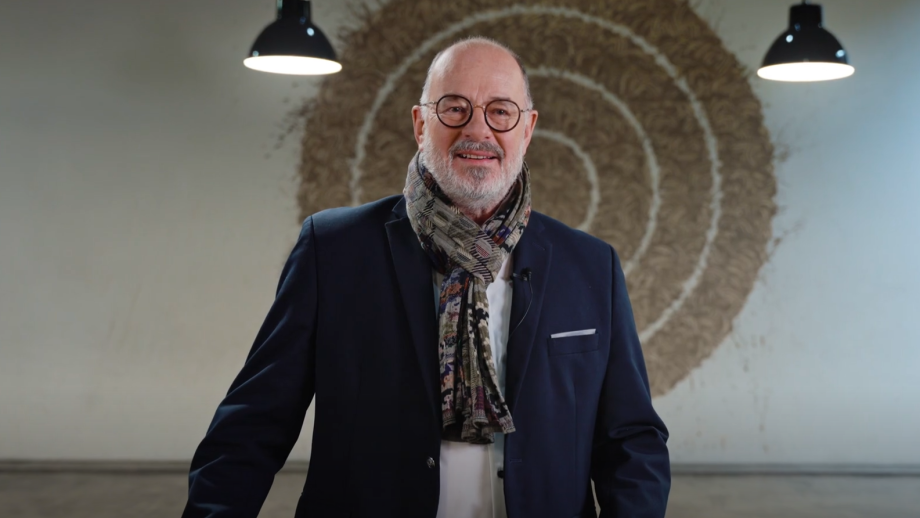
For the second instalment of the 'Domaines de Demain' series, we meet Pierre Montégut, Technical Director of Château Suduiraut. For more than 20 years, he has broken the conventions of Sauternes – producing, in this region famed for sweet wine, a range of serious, terroir-driven dry white wines built around a committed belief in Sémillon.
Pierre discusses why he is so invested in dry Bordeaux whites, the grape variety that once built Bordeaux's reputation for white wine, and how a new sub-appellation could help consumers identify the origins of these wines.
Ella Lister: In Sauternes, the land of great sweet wines, Château Suduiraut has chosen to challenge convention by producing dry white wines. A considered gamble, reflecting a region questioning and rethinking its future. Let's welcome Pierre Montégut.
For more than 20 years, Suduiraut has produced dry white wines on a terroir renowned worldwide for its sweet wines. Why make this counterintuitive choice?
Pierre Montégut: At the beginning, it's true that very few of us believed in the excellence of these dry whites made in this small corner of Bordeaux. But I believe, as in other parts of the world, that a great terroir, with the right grape variety, can produce both a great dry white wine and a great Sauternes. That's what we have been trying to demonstrate, to prove, for the past 20 years at Suduiraut. Today, it has become more common. Over the past five or six years, we've seen – and I think that's a very good thing – a wide range of new dry cuvées from all the estates. Because I sincerely believe we have something to show in this small part of Bordeaux, located in the Southern Gironde.
EL: You mentioned adapted grape varieties?
PM: Yes, and I think it is really about defending Sémillon. I believe it is a serious grape variety that, unfortunately, is less flexible, less immediately identifiable, less easy, both to grow and to taste. Sauvignon Blanc has often taken the lead, because it is more varietal in its expression, more immediate. But we must remember that Sémillon was once the dominant grape in Bordeaux, and it built the reputation and greatness of Bordeaux's white wines. Like Riesling, or Chenin, it is a grape that perfectly reflects the place where it grows.
EL: Consumer tastes are evolving, and demand for dry wines continues to increase. Did you anticipate this trend, or was it more intuition?
PM: Indeed, for me, sweet wines are magical wines, and it's a style I am deeply passionate about. But we must accept that their consumption is a lot lower today. So, after several trials, we gradually turned towards developing a range of dry whites. Today, we have three cuvées at Château Suduiraut: Les Lions de Suduiraut, Château Suduiraut Grand Vin Blanc Sec, and a monovarietal cuvée, Pur Sémillon.
EL: Does this mean that dry wines could one day dominate the entire Sauternes Appellation?
PM: Sauternes built its reputation, its fame, on sweet wines. We must preserve that. It is the identity of this place. But if producing dry white wines helps us continue making great sweet wines, then I strongly believe in it. All wines produced within the Sauternes appellation, if they are not sweet wines, must be labelled Bordeaux. "Dry Sauternes" does not exist. However, with the regional body of Sauternes and Barsac, we are in discussions to propose to the INAO a specific category within the Bordeaux appellation. The aim is to help consumers understand that this dry Bordeaux white comes from the Sauternes region. Several options are currently being discussed for the name of the sub-appellation – "Coteaux du Ciron," for example. This would allow consumers to identify where this dry Bordeaux white comes from, and its particular identity. Discussions are ongoing. I hope it will happen quite soon.
EL: Finally, if you had to imagine the estate of the future, twenty years from now, whether in Bordeaux or elsewhere, what would it look like?
PM: Like an ecosystem with vineyards at its centre.
To watch (and read) the full interview in French, follow this link to Le Figaro Vin's website: Domaines de Demain: Château Suduiraut